


A construction site brings together people, machinery, activities, and professionals from different disciplines. When multiple contractors are involved in the same project, even at different stages, properly organising activities and responsibilities becomes essential to prevent risks and ensure that work proceeds in an orderly manner.
Construction site safety coordination should therefore not be seen merely as a regulatory requirement. When integrated from the earliest stages of a project, it can contribute to better planning, minimise interference between activities, and improve communication between clients, designers, and contractors.
In Italy, the main regulatory framework for temporary or mobile construction sites is Legislative Decree 81/2008, which establishes the roles, responsibilities, and procedures relating to occupational health and safety.
What Is Construction Site Safety Coordination?
Safety coordination involves analysing the project and the organisation of construction activities to identify risks arising not only from individual tasks but also from their simultaneous or successive execution.
A construction site is, by nature, a constantly evolving environment. An activity that is safe when considered independently may become hazardous when it overlaps with work carried out by another contractor.
It is therefore necessary to assess access points, operational areas, material handling, work sequences, shared spaces, and potential interference between activities.
The objective is to establish an organisational framework in which different activities can proceed under clearly defined and shared safety conditions.
CSP and CSE: Two Roles at Different Project Stages
The Italian regulatory framework distinguishes between the Safety Coordinator during the Design Phase (CSP) and the Safety Coordinator during the Construction Phase (CSE).
The CSP is involved during the design stage of the project. This role ensures that safety requirements are considered before construction begins, when it is still possible to influence work organisation and design decisions.
The CSE, on the other hand, operates during construction and, through coordination and monitoring activities, verifies the implementation of the applicable site safety provisions and the consistency of contractors' Operational Safety Plans with the Safety and Coordination Plan, where required.
These two roles are therefore closely connected: the first anticipates risks and establishes safety planning, while the second oversees how these measures are implemented as construction progresses.
When Must a Safety Coordinator Be Appointed?
Italian Legislative Decree 81/2008 establishes specific obligations for the client or the person responsible for the works. In particular, where a construction project involves more than one executing contractor, even if they are not working simultaneously, the appointment of safety coordination professionals is required under the conditions established by law. The legislation also provides for specific circumstances and exceptions that must be assessed for each individual project.
This is an important distinction because two contractors do not necessarily need to be working on-site at the same time for safety coordination requirements to become relevant.
A construction project may involve a succession of building contractors, mechanical and electrical installers, window and door specialists, and other specialised companies. The sequence of these activities itself requires proper organisation.
A preliminary technical assessment is therefore advisable to determine the specific obligations applicable to each project.
The Safety and Coordination Plan (PSC)
One of the main tools used in construction site safety coordination is the Safety and Coordination Plan, known in Italy as the Piano di Sicurezza e Coordinamento (PSC), whenever its preparation is required by law.
This document analyses site organisation, construction phases, and the risks arising from potential interference between different activities.
An effective PSC must reflect the actual characteristics of the project. It should not be treated as a standard document prepared solely to fulfil a formal obligation.
Access arrangements, storage areas, operational sequences, working at height, material handling, and the simultaneous presence of different workers are just some of the aspects that may influence safety planning.
Safety thus becomes an integral part of the overall organisation of the construction site.
PSC and POS: What Is the Difference?
The PSC and POS serve different purposes.
The Safety and Coordination Plan (PSC) considers the construction site as a whole and addresses, among other aspects, the relationships and potential interference between different activities.
The Operational Safety Plan (POS), or Piano Operativo di Sicurezza, is instead prepared by each executing contractor in relation to its own activities and organisational structure.
Under Italian Legislative Decree 81/2008, one of the CSE's responsibilities is to verify the suitability of each POS and its consistency with the PSC, where the latter is required.
These documents are therefore not alternatives. Instead, they address different levels of construction site safety management.
Why Safety Must Be Considered During the Design Phase
Addressing safety only after construction has already begun means missing important opportunities for prevention.
During the design phase, it is possible to evaluate decisions that directly influence how the project will be built.
An impractical access point, a complex construction sequence, or overlapping activities may create problems that would have been easier to address beforehand.
The legislation itself requires the client or the person responsible for the works to consider architectural, technical, and organisational decisions, as well as the duration of different construction phases, during the design process.
Integrating design and safety therefore makes it possible to anticipate problems rather than dealing with them only when they arise.
Reducing Interference Between Contractors
One of the most tangible benefits of safety coordination is the management of interference between different contractors.
For example, imagine a construction site where mechanical and electrical installations, material handling, and structural works are scheduled to take place simultaneously. Without proper planning, vehicles and workers could find themselves sharing the same spaces while carrying out incompatible activities.
Coordination makes it possible to establish clearer sequences, circulation routes, and working procedures.
This does not only improve safety. It can also contribute to better work organisation, preventing situations in which one team must interrupt its activities because the required space is occupied by another contractor.
Safety and Construction Scheduling
Effective safety management is closely linked to the construction schedule.
Knowing which activities need to be carried out, when they must take place, and who is responsible for them makes it possible to identify the most critical phases in advance.
The construction programme can therefore also become a tool for reducing overlapping activities and organising site operations more efficiently.
This is particularly important in complex projects, where numerous contractors and suppliers must work according to precise sequences.
More accurate planning makes it easier to balance operational requirements, safety, and project deadlines.
What Benefits Does Safety Coordination Offer Businesses?
Construction site safety coordination is often associated primarily with regulatory obligations, but effective management can also provide significant operational benefits.
Greater clarity regarding scheduled activities allows contractors to understand site conditions and constraints before starting work.
Defined routes, organised construction phases, and shared information can reduce misunderstandings and conflicts between different teams.
The main benefits include:
Better organisation of construction activities;
Greater clarity in communication and relationships between site personnel;
Reduced interference between different operations;
More efficient management of construction site spaces;
Greater ability to manage changes and unexpected situations;
More effective coordination between designers, contractors, and clients.
Safety therefore becomes part of the overall quality of project management.
The Role of the CSE During Construction
Safety coordination does not end with the preparation of the initial documentation.
Construction sites are constantly changing, and the CSE must monitor the development of activities, verify the implementation of relevant safety measures, and update the required coordination documents when necessary.
The responsibilities established by Italian Legislative Decree 81/2008 include coordinating and monitoring compliance with the provisions of the PSC, verifying the suitability of contractors' Operational Safety Plans, and ensuring their consistency with the overall safety plan.
This makes the role dynamic: the coordinator must continuously compare what was planned with what is actually happening during construction.
Coordinating Safety and Detailed Design
In more complex projects, safety management and detailed design can benefit from continuous collaboration.
Construction details, work sequences, and access arrangements for elements to be built or installed also influence site organisation.
A more thoroughly developed design reduces uncertainty and allows activities and resources to be planned with greater precision.
When architecture, structures, building systems, and safety are considered as parts of a single process, it becomes easier to anticipate issues that might otherwise emerge during construction.
Safety Coordination Does Not Replace Contractors' Responsibilities
It is important to emphasise that appointing a safety coordinator does not transfer all safety-related responsibilities to a single individual.
Contractors, employers, managers, supervisors, self-employed workers, and other parties involved retain the obligations assigned to their respective roles under applicable legislation.
The purpose of coordination is precisely to establish connections between different activities and stakeholders, not to replace their individual responsibilities.
Effective safety management therefore requires collaboration, information sharing, and continuous attention from everyone involved on the construction site.
Construction Site Safety Coordination with STRAstudio
STRAstudio approaches construction site safety coordination as part of a broader vision of project design and construction.
Its experience in architectural design, detailed design, and multidisciplinary coordination makes it possible to view construction not as a separate phase, but as the result of decisions developed during the earlier stages of the project.
The objective is to contribute to the organised management of construction activities by identifying potential interference and critical issues in advance and encouraging communication between the different parties involved.
For businesses and clients, integrating safety, design, and planning means approaching construction with clearer information and a better understanding of the activities to be carried out.
Safety is therefore not merely a regulatory obligation, but an essential component of a well-organised project and a carefully managed construction process.
Last news.

-
 22-12-2026
Construction Site Safety Coordination: Obligations and Benefits for Businesses
Construction site safety coordination: obligations, responsibilities, and benefits for businesses se
 Learn more

-
 12-12-2026
Building Permits for Businesses: How to Manage Approvals and Compliance
Building permits for businesses: STRAstudio supports companies and professionals in managing approva
Learn more -
 20-11-2026
Industrial Building Design: Efficiency, Safety, and Functionality
Industrial building design: STRAstudio integrates efficiency, safety, BIM, and functionality to cre
Learn more -
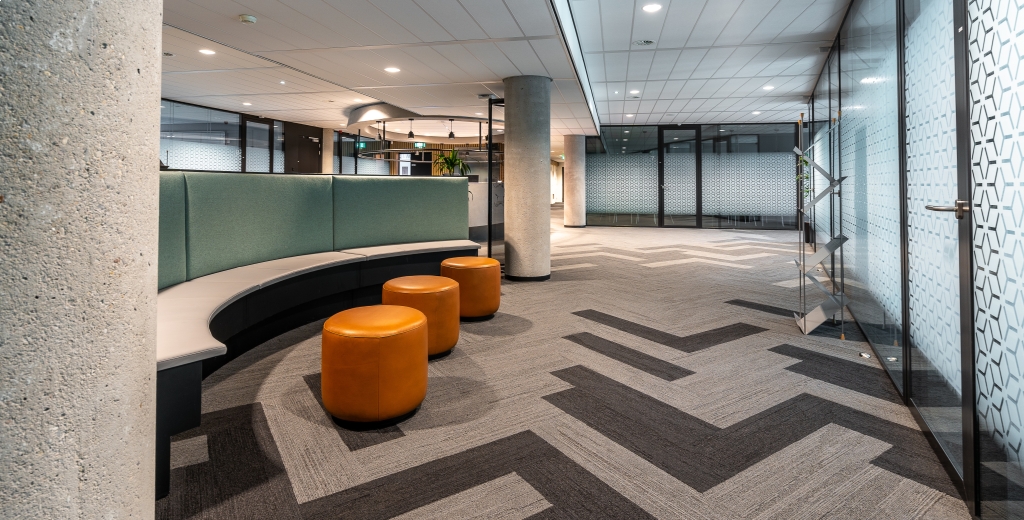 10-11-2026
Office Restyling: How to Improve Employee Comfort and Productivity
Office restyling to improve comfort, functionality, and productivity. STRAstudio designs efficient,
Learn more -
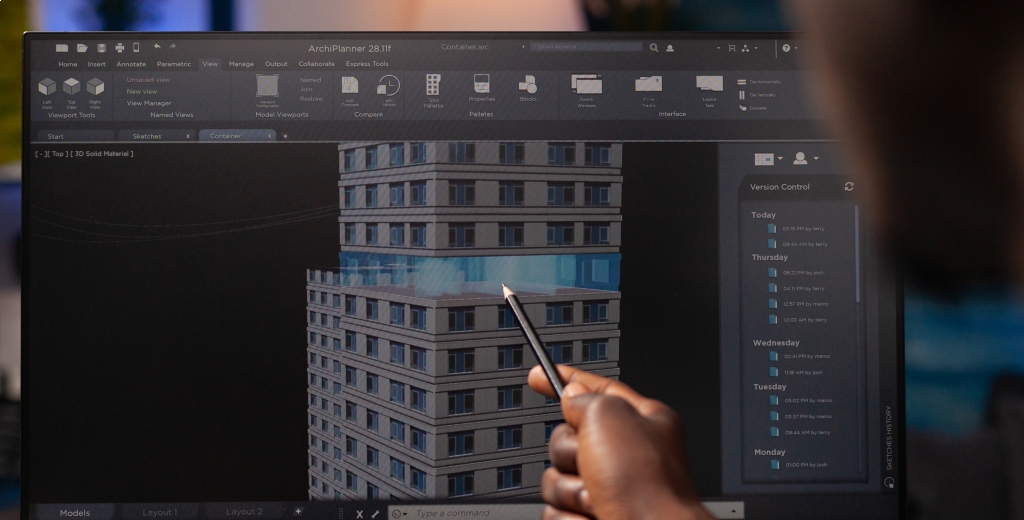 20-10-2026
BIM Certifications: The Value They Bring to Design Firms and Contractors
Discover the value of BIM certifications for design firms and contractors: recognizable skills, defi
Learn more -
 10-10-2026
Converting a Warehouse into Offices: Feasibility, Design, and Permits
Want to convert a warehouse into offices? Discover the feasibility, design, systems, and authorizati
Learn more -
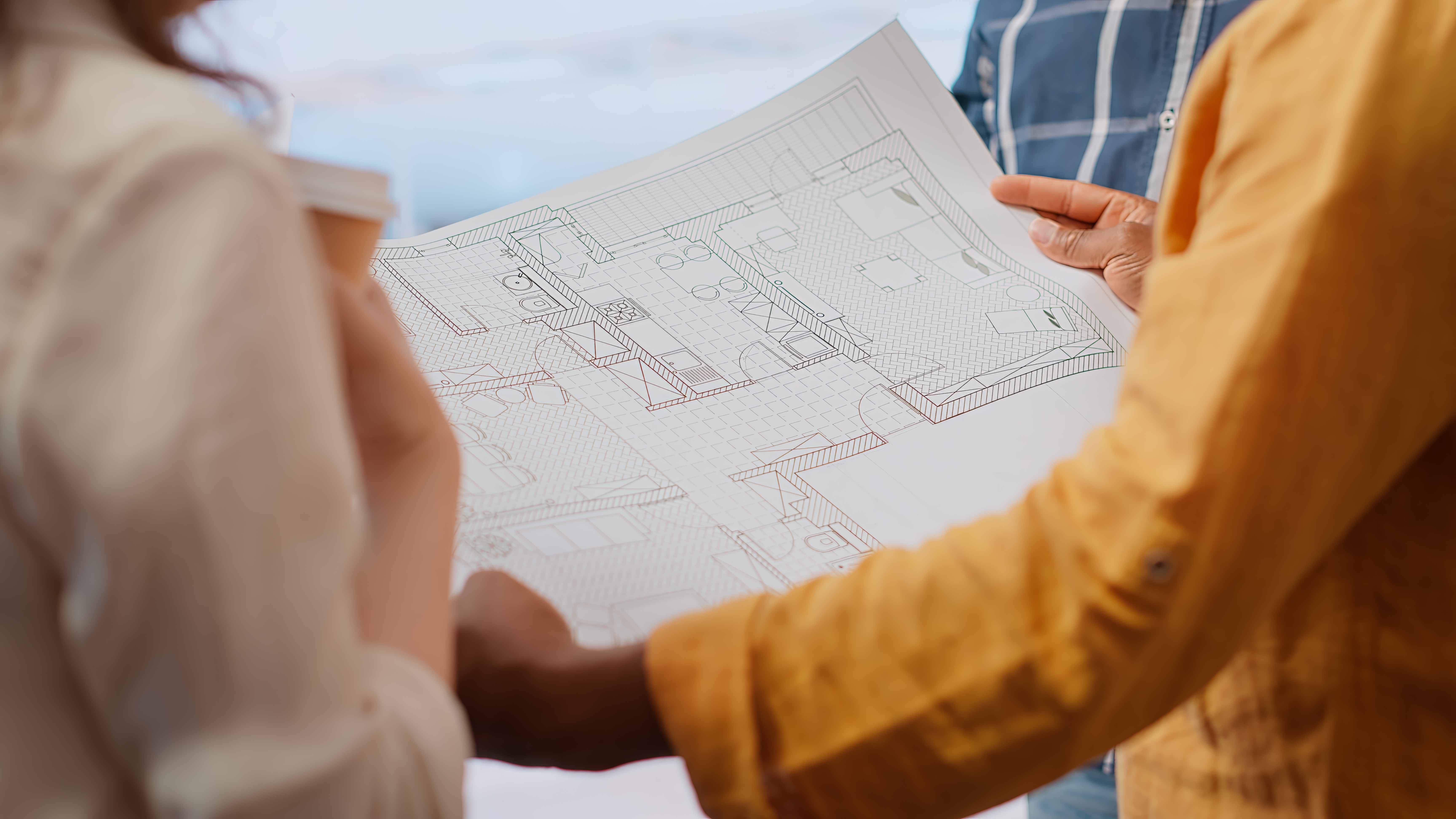 20-09-2026
New home interior design: defining spaces before construction begins
Discover how the interior design of a new home defines spaces, furniture, lighting.
Learn more -
 10-09-2026
Technical documentation for tenders: how to build a competitive bid
Technical documentation for tenders: STRAstudio supports companies and professionals with reports, d
Learn more -
 21-08-2026
Designing a Single-Family Villa: From Initial Needs to Realization
Discover how the design of a single-family villa comes to life: from the needs analysis to the detai
Learn more -
 10-08-2026
Integrated Detailed Design: Coordinating Every Discipline Before Construction
Discover how integrated detailed design coordinates architecture, structures, and MEP systems, reduc
Learn more -
 10-07-2026
BIM and Revit: What Are the Differences and Why They Are Essential
Discover the differences and benefits of BIM and Revit to coordinate projects, reduce errors, optimi
Learn more -
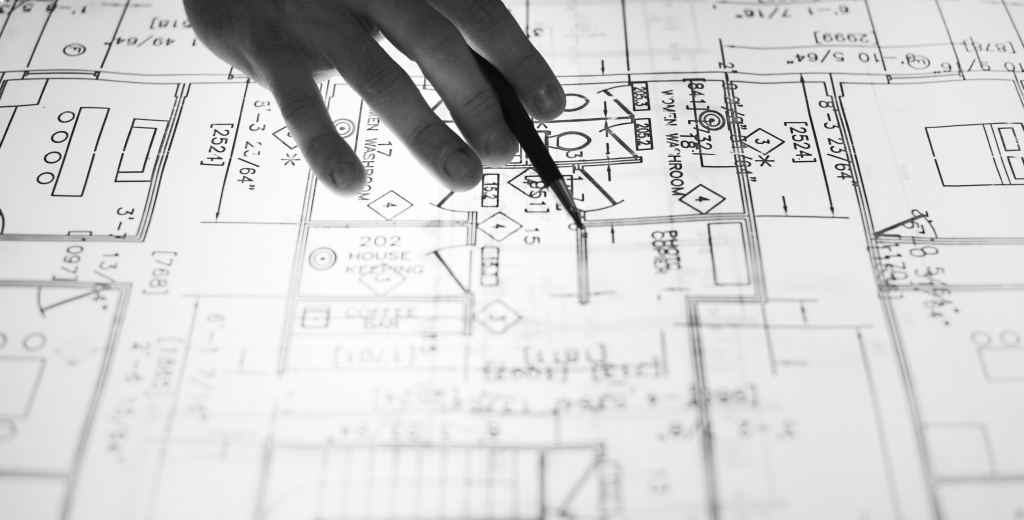 09-07-2026
Architectural Design: All the Stages You Need to Know
Discover all the stages of architectural design, from analysis to the construction site, and how STR
Learn more -
 01-12-2024
Construction Site Health & Safety: The Role of Safety Coordination
Construction site: planning, training, and coordination to ensure a safe work environment.
Learn more -
 01-12-2024
Feasibility Studies and Building Permits: Where to Start Building Your Home
Get building permits for your new home. Learn the basic steps to build safely.
Learn more -
 01-12-2024
Technical-Economic Assessment: Make Informed Decisions to Renovate Your Home
We provide detailed analysis for renovations, purchases, and energy efficiency improvements.
Learn more -
 01-12-2024
BIM Design for Businesses: Invest in Project Digitalisation
BIM design for businesses can improve project efficiency, coordination, and management
Learn more

